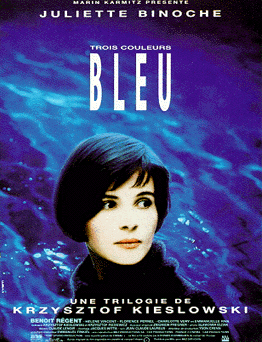
Official promotional poster. Rights belong to the respective rights holders.
Read the film reference Availability and pricing vary by region.Three Colors: BlueA movie brief.
1993 / psychological drama / Directed by Krzysztof Kieślowski
A woman's journey through grief and emotional liberation
What is Three Colors: Blue about?
Julie, a woman who recently lost her husband and daughter in a car accident, tries to isolate herself from her past life. However, she discovers that she cannot escape human connections.
Five things to know.
Setup
The film follows Julie, a woman who survives a car accident that kills her husband and daughter, leading her to attempt to erase her past life.
World
The movie is set in Paris and explores themes of grief, isolation, and human connection in a urban setting.
Pressure
Julie faces pressure from her past, including her husband's unfinished musical composition and her connections with others who knew her family.
Craft
The film features a critically acclaimed performance by Juliette Binoche and a score by Zbigniew Preisner that incorporates themes of mourning and memory.
Viewing Note
Viewers should be prepared for a contemplative and emotionally intense film that explores complex themes of loss and human connection.
A thought to take with you.
A poignant exploration of grief, freedom, and the human condition.
Is it your kind of movie?
Fans of character-driven dramas and those interested in exploring complex themes of loss and human connection may enjoy this film. Viewers can expect a slow-burning, introspective movie that focuses on character development and emotional depth.
Sources & scope
This AI-assisted brief is based on the linked secondary reference. Facts and interpretation are separated; it does not claim personal viewing or independent expert review.
Source details checked October 3, 2026. Suggest a correction · Our editorial approach