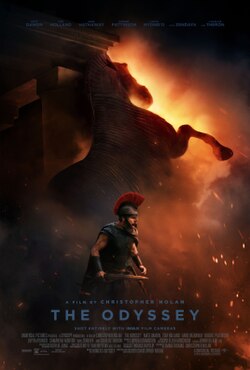
Official promotional poster. Rights belong to the respective rights holders.
Read the film reference Availability and pricing vary by region.The OdysseyA movie brief.
2026 / Epic Action Fantasy / Directed by Christopher Nolan
An odyssey of courage and wit.
What is The Odyssey about?
The Greek king of Ithaca, Odysseus, navigates a perilous journey home after the Trojan War. He encounters mythical beings as he attempts to reunite with his wife Penelope.
Five things to know.
Epic Scope
The film is an adaptation of Homer's ancient Greek epic poem, the Odyssey, with a large ensemble cast and extensive location shooting.
Realistic Approach
Nolan chose to take a realistic approach in depicting the evidence and actions of the gods through natural phenomena once considered supernatural.
High Production Costs
The film had an estimated budget of $250 million, making it one of the most expensive films of Nolan's career.
IMAX Filming
The Odyssey was the first feature film shot entirely on IMAX 70 mm film cameras, with over 2 million feet of film used.
Awaited Viewing Experience
The film's unique storytelling and visual style make it a highly anticipated viewing experience for fans of epic action fantasy films.
A thought to take with you.
Returning to Ithaca is more than reaching a destination: Odysseus must keep a reason for returning while encounters delay him. The homeward journey invites a distinction between surviving an adventure and remaining connected to the people for whom the journey matters.
Is it your kind of movie?
Choose it for a mythic homecoming in which obstacles test persistence and attachment, rather than for a self-contained modern adventure.
Sources & scope
This AI-assisted brief is based on the linked secondary reference. Facts and interpretation are separated; it does not claim personal viewing or independent expert review.
Source details checked September 7, 2026. Suggest a correction · Our editorial approach