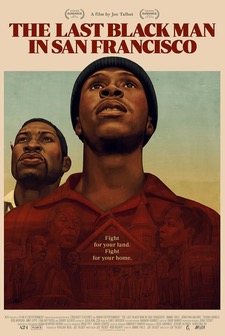
Official promotional poster. Rights belong to the respective rights holders.
Read the film reference Availability and pricing vary by region.The Last Black Man in San FranciscoA movie brief.
2019 / drama / Directed by Joe Talbot
A poignant tale of friendship and belonging in a changing city.
What is The Last Black Man in San Francisco about?
The film follows Jimmie Fails, a young man living in Bayview-Hunters Point, San Francisco, as he navigates his life with his best friend Montgomery. They share a special bond with a Victorian house in the Fillmore District.
Five things to know.
Setup
The Last Black Man in San Francisco is partly based on the life of Jimmie Fails, who co-created the story with director Joe Talbot.
World
The film portrays the changing landscape of San Francisco, particularly the gentrification of neighborhoods like Bayview-Hunters Point and Fillmore.
Pressure
Jimmie and Montgomery face challenges as they try to maintain a sense of belonging and ownership in their community.
Craft
The film features a mix of poetic visuals and realistic storytelling, with a standout performance from Jimmie Fails.
Viewing Note
The film's portrayal of gentrification and racial tensions may be intense for some viewers, but it offers a powerful and thought-provoking experience.
A thought to take with you.
Jimmie's attachment to a Victorian house links personal memory to a city where ownership and belonging are being reshaped. His friendship with Montgomery offers another place to stand, while the film lets San Francisco's changing landscape remain part of their story.
Is it your kind of movie?
Choose it for a lyrical drama about friendship, home, and displacement in San Francisco. Its measured storytelling and dreamlike passages favor reflection over plot momentum.
Sources & scope
This AI-assisted brief is based on the linked secondary reference. Facts and interpretation are separated; it does not claim personal viewing or independent expert review.
Source details checked October 2, 2026. Suggest a correction · Our editorial approach