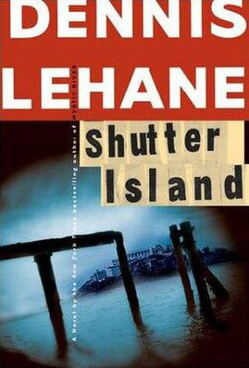
Official promotional poster. Rights belong to the respective rights holders.
Read the film reference Availability and pricing vary by region.Shutter IslandA movie brief.
2010 / Psychological Horror / Directed by Martin Scorsese
Sanity hangs by a thread on a remote and haunted island.
What is Shutter Island about?
In 1954, U.S. Marshal Teddy Daniels investigates the disappearance of a patient from Ashecliffe Hospital, a psychiatric hospital on a remote island. He navigates a complex web of secrets and conspiracies.
Five things to know.
Setup
The story begins with Teddy Daniels, a widowed U.S. Marshal, arriving on Shutter Island to investigate the disappearance of a patient.
World
The isolated hospital and island setting creates a sense of claustrophobia and foreboding, inspired by the hospital and grounds on Long Island in Boston Harbor.
Pressure
Teddy faces mounting pressure as he uncovers potential government experiments and conspiracies, testing his sanity and determination.
Craft
The film adaptation, directed by Martin Scorsese, features a star-studded cast, including Leonardo DiCaprio, Mark Ruffalo, and Ben Kingsley.
Viewing Note
The film's complex narrative and themes require close attention, and viewers should be prepared for a thought-provoking and unsettling experience.
A thought to take with you.
Teddy's investigation depends on records and conversations at an institution where access to reliable information is limited. The island setting gives the case a closed boundary, while his own memories complicate the role of observer he is trying to maintain.
Is it your kind of movie?
Choose it for a psychological mystery with a bleak atmosphere and an investigation shaped by mental-health themes. It contains disturbing imagery and a deliberately unsettled point of view.
Sources & scope
This AI-assisted brief is based on the linked secondary reference. Facts and interpretation are separated; it does not claim personal viewing or independent expert review.
Source details checked September 8, 2026. Suggest a correction · Our editorial approach