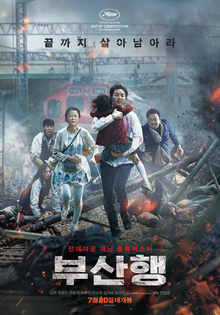
Official promotional poster. Rights belong to the respective rights holders.
Read the film reference Availability and pricing vary by region.Train to BusanA movie brief.
2016 / Action horror film / Directed by Yeon Sang-ho
Survival is just a train ride away.
What is Train to Busan about?
A group of passengers must fight for survival when a zombie outbreak occurs on a train traveling from Seoul to Busan. The passengers must band together to stay alive and reach the quarantine zone.
Five things to know.
Setup
The film takes place primarily on a KTX from Seoul to Busan as a zombie apocalypse suddenly breaks out and threatens the safety of the passengers.
World
The film is set in South Korea and features a unique blend of zombie horror and social commentary.
Pressure
The passengers on the train must navigate the outbreak and try to survive as the situation rapidly spirals out of control.
Craft
The film features impressive special effects makeup for the zombies, with a focus on varying the styling depending on the stage of infection.
Viewing note
The film received positive reviews for its thrilling and unique take on the zombie genre, with many praising its fully realized characters and social commentary.
A thought to take with you.
The moving train turns social differences into immediate decisions about who gets protected and who is kept outside. Seok-woo begins the trip focused on his daughter and his own priorities; the outbreak forces him to measure those priorities against the needs of strangers.
Is it your kind of movie?
Choose it for a Korean-language zombie thriller that keeps its action inside a passenger train. Expect sustained violence and tense crowd scenes.
Sources & scope
This AI-assisted brief is based on the linked secondary reference. Facts and interpretation are separated; it does not claim personal viewing or independent expert review.
Source details checked September 8, 2026. Suggest a correction · Our editorial approach