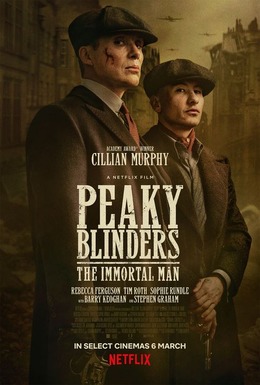
Official promotional poster. Rights belong to the respective rights holders.
Read the film reference Availability and pricing vary by region.Peaky Blinders: The Immortal ManA movie brief.
2026 / crime drama / Directed by Tom Harper
War and family entwined in a deadly game.
What is Peaky Blinders: The Immortal Man about?
In 1940, Nazi Germany plots to destabilize the UK economy with counterfeit currency. Tommy Shelby, former leader of the Peaky Blinders, must confront his past and protect his family.
Five things to know.
Setup
The film is set amidst the Birmingham Blitz in November 1940, with Nazi Germany initiating a plot to economically subdue the United Kingdom.
World
The movie features a mix of familiar and new characters, including Cillian Murphy as Tommy Shelby and Barry Keoghan as his son Duke Shelby.
Pressure
Tommy Shelby is haunted by visions of his deceased daughter and struggles with his past actions.
Craft
The film features a blend of action, drama, and historical elements, with a focus on the Shelby family's struggles.
Viewing note
The film may appeal more strongly to viewers already familiar with the Peaky Blinders television series.
A thought to take with you.
A wartime threat gives Tommy's past consequences beyond his household. The counterfeit-currency premise also makes violence only one possible instrument of power. Watch how a character used to controlling local conflicts responds when family loyalties intersect with a much larger struggle.
Is it your kind of movie?
Choose it for Tommy Shelby's return in a wartime setting; familiarity with the series provides context for the family's history and loyalties.
Sources & scope
This AI-assisted brief is based on the linked secondary reference. Facts and interpretation are separated; it does not claim personal viewing or independent expert review.
Source details checked September 7, 2026. Suggest a correction · Our editorial approach