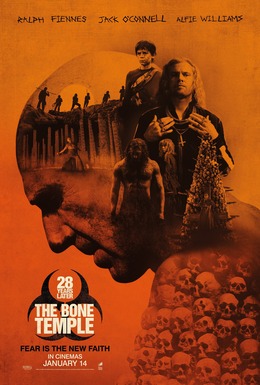
Official promotional poster. Rights belong to the respective rights holders.
Read the film reference Availability and pricing vary by region.28 Years Later: The Bone TempleA movie brief.
2026 / post-apocalyptic horror / Directed by Nia DaCosta
Humanity teeters on the edge of darkness and chaos.
What is 28 Years Later: The Bone Temple about?
The film follows Spike as he joins a satanic cult called the Fingers, while Dr. Ian Kelson forms a bond with Samson, an Alpha Infected. As the story unfolds, Kelson and Samson develop a human connection.
Five things to know.
Setup
The movie is a direct sequel to 28 Years Later and the fourth installment in the 28 Days Later film series.
World
The story takes place in a post-apocalyptic world where the Rage Virus has devastated humanity.
Pressure
The characters face intense pressure from the psychopathic cult leader, Sir Lord Jimmy Crystal, and the infected.
Craft
The film features a unique blend of horror and humanity, with a focus on character development and atmospheric tension.
Viewing Note
The film is not for the faint of heart, with graphic violence and intense scenes throughout.
A thought to take with you.
Spike's group membership and Kelson's connection with Samson offer different ways of finding security in a hostile world. One places belonging inside a collective; the other makes it depend on an individual encounter. The question is what each relationship asks someone to overlook.
Is it your kind of movie?
Choose it for an infection-world story that puts human bonds and group allegiance under pressure; the subject and setting remain disturbing.
Sources & scope
This AI-assisted brief is based on the linked secondary reference. Facts and interpretation are separated; it does not claim personal viewing or independent expert review.
Source details checked September 7, 2026. Suggest a correction · Our editorial approach