Turn the Ship Around: Summary in 5 Key Points
AI-assisted book brief. Verify important claims against the original book; this page does not claim personal reading or independent expert review.
Questions to take into the book
- What organizational conditions made it difficult for the Santa Fe crew to take initiative?
- How does Marquet's 'intent' language differ from simply asking for permission?
- What safeguards must remain when decision authority is moved closer to the work?
Who should read the full book
This book is ideal for managers, executives, and team leaders looking to improve their leadership skills and create a more collaborative work environment. Individuals who are already familiar with agile leadership principles may find some concepts repetitive. Those in non-management roles may not find the content directly applicable to their work.
📚 Get the full book on Amazon →How to use this idea
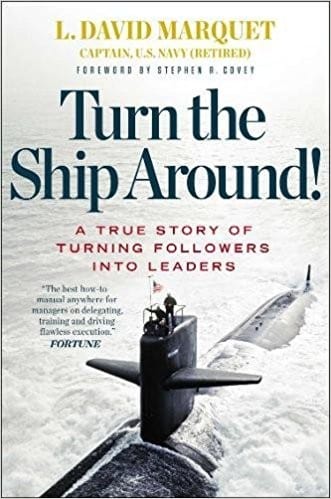
Marquet recounts replacing a command-and-control pattern aboard the USS Santa Fe with a leadership approach that gives people closer to the work more authority and responsibility. His 'intent-based' model invites teams to state what they intend to do, then supports leaders in checking competence and organizational clarity. The case is specific; transferring it requires attention to risk and accountability.
Where it has limits
A submarine command case study does not transfer automatically to every team or safety-critical setting. Delegation needs training, clear limits, and escalation paths; leaders remain accountable for ensuring that authority matches competence and risk.
A small test to try
For a reversible team task, invite the person closest to the work to state an intended action and the information they used. Agree on a clear stop or escalation condition before delegating.
AI-assisted editorial interpretation, not a claim of personal reading or independent expert review. Source checked 2026-10-14: Penguin Random House: Turn the Ship Around! book description.
Brief your own reading in 10 seconds
Paste any article, essay or notes and get the 5 points that matter. Free, no signup.
Ask anything about this book
Ask for an AI-assisted explanation. Useful questions may be considered for editorial review; repeated requests do not publish an answer.