The Coaching Habit: Summary in 5 Key Points
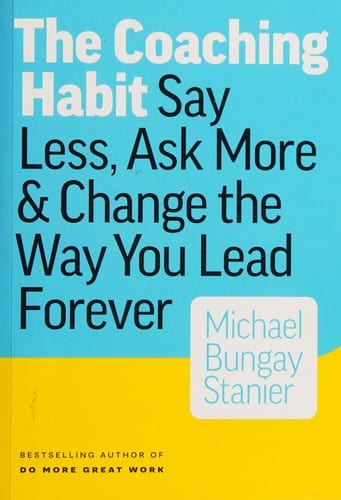
AI-assisted book brief. Verify important claims against the original book; this page does not claim personal reading or independent expert review.
Questions to take into the book
- How does asking before advising change ownership of a problem?
- When would direct instruction be more appropriate than coaching?
- What makes a question curious rather than formulaic?
Who should read the full book
This book is essential reading for managers, leaders, and anyone in a helping profession who wants to improve their coaching skills. If you're not in a position to apply these skills regularly, you may find some concepts less relevant.
📚 Get the full book on Amazon →How to use this idea
Bungay Stanier's central move is to help a manager ask and listen before jumping into advice. A small set of recurring questions can make coaching less formal and more usable in ordinary work conversations. The skill is not asking a script mechanically; it is staying curious long enough to understand the actual problem and the other person's agency.
Where it has limits
Coaching questions do not replace clear direction, specialist support, or decisions that belong to a manager. The approach works only when there is enough trust and time for an honest exchange.
A small test to try
In one appropriate conversation, ask what is most important to the other person right now, then listen without immediately proposing a solution. Summarize what you heard and ask if you understood.
AI-assisted editorial interpretation, not a claim of personal reading or independent expert review. Source checked 2026-10-14: Simon & Schuster: official publisher page.
Brief your own reading in 10 seconds
Paste any article, essay or notes and get the 5 points that matter. Free, no signup.
Ask anything about this book
Ask for an AI-assisted explanation. Useful questions may be considered for editorial review; repeated requests do not publish an answer.