The Molecule of More: Summary in 5 Key Points
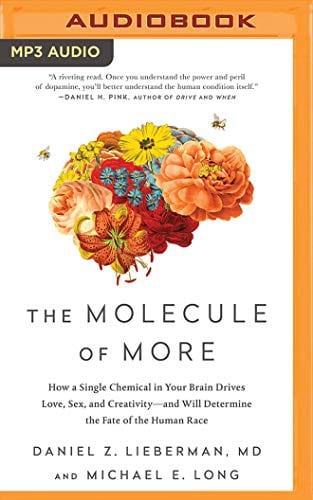
AI-assisted book brief. Verify important claims against the original book; this page does not claim personal reading or independent expert review.
Questions to take into the book
- How do Lieberman and Long use the contrast between wanting and satisfaction to structure the book?
- Which claims describe dopamine specifically, and which are broader interpretations about human behavior?
- What other psychological or social factors could contribute to the same behavior?
Who should read the full book
This book is ideal for individuals looking to improve their motivation and productivity, particularly those in creative or competitive fields. Readers who are already familiar with the basics of dopamine and motivation may find some of the content repetitive. Those seeking a comprehensive guide to personal development and goal achievement will find this book valuable.
📚 Get the full book on Amazon →How to use this idea
Lieberman and Long use dopamine to discuss wanting, anticipation, and future-oriented behavior, contrasting it with attention to immediate experience and satisfaction. The model can be a memorable way to think about motivation, but a single chemical does not explain complex behavior on its own. A careful reading separates the authors' organizing metaphor from the wider neuroscience.
Where it has limits
This is a popular science synthesis, not a diagnostic account of addiction, mood, or motivation. Dopamine has varied functions across brain systems; do not reduce a person's behavior to one neurotransmitter or use the book as medical guidance.
A small test to try
Choose one everyday desire and distinguish the anticipation of getting it from your experience after receiving it. Treat the distinction as an observation about that example, not proof of a general brain mechanism.
AI-assisted editorial interpretation, not a claim of personal reading or independent expert review. Source checked 2026-10-14: Simon & Schuster: The Molecule of More publisher page.
Brief your own reading in 10 seconds
Paste any article, essay or notes and get the 5 points that matter. Free, no signup.
Ask anything about this book
Ask for an AI-assisted explanation. Useful questions may be considered for editorial review; repeated requests do not publish an answer.