The Comfort Crisis: Summary in 5 Key Points
AI-assisted book brief. Verify important claims against the original book; this page does not claim personal reading or independent expert review.
Questions to take into the book
- Which conclusions come from research and which from Easter's personal reporting?
- How can a reader distinguish a beneficial challenge from an avoidable risk?
- What role do access and individual health play in the book's examples?
Who should read the full book
The Comfort Crisis is a must-read for individuals seeking personal growth and self-improvement, particularly those struggling with anxiety or feeling unfulfilled. However, readers who are averse to challenging their comfort zones or prefer straightforward self-help advice may find this book less appealing. It is also suitable for professionals looking to enhance their well-being and productivity.
📚 Get the full book on Amazon →How to use this idea
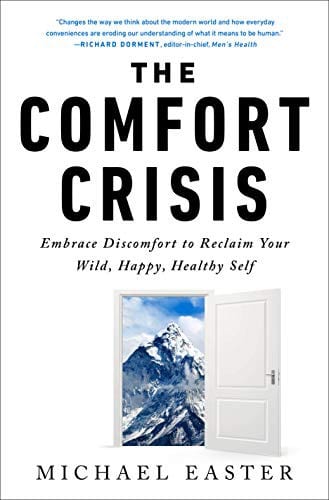
Easter combines reporting and personal experiments to question how convenience shapes attention, movement, and tolerance for discomfort. Its strongest prompt is to distinguish useful challenge from needless friction; choosing a demanding activity can be meaningful without implying that comfort is inherently bad. The reported adventure is a narrative case, not a controlled test of every health claim.
Where it has limits
The book's physical challenges and lifestyle suggestions are not appropriate for everyone. Health status, disability, environment, and access matter; readers should avoid imitating risky activities without suitable preparation or professional guidance.
A small test to try
Pick a safe, modest inconvenience that fits your circumstances, such as a short device-free walk. Note what you expected and what actually happened, without treating discomfort as proof of benefit.
AI-assisted editorial interpretation, not a claim of personal reading or independent expert review. Source checked 2026-10-14: Penguin Random House: official publisher page.
Brief your own reading in 10 seconds
Paste any article, essay or notes and get the 5 points that matter. Free, no signup.
Ask anything about this book
Ask for an AI-assisted explanation. Useful questions may be considered for editorial review; repeated requests do not publish an answer.