Slow Productivity: Summary in 5 Key Points
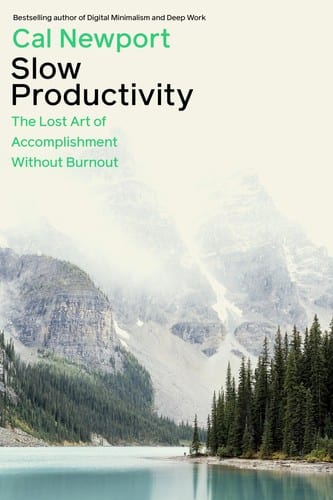
AI-assisted book brief. Verify important claims against the original book; this page does not claim personal reading or independent expert review.
Questions to take into the book
- What does doing fewer things change about the number of commitments active at once?
- How can a natural pace include difficult work without making overload the default?
- What distinguishes an observable improvement in quality from merely spending more time on a task?
Who should read the full book
This book is ideal for individuals seeking to optimize their productivity and professionals looking to improve their work-life balance. However, those already familiar with Cal Newport's work may find some concepts repetitive. Readers who value action over theory may also find the book's pace too slow.
📚 Get the full book on Amazon →How to use this idea
Newport's three principles make reducing simultaneous commitments a condition for doing better work, rather than an excuse to avoid demanding work. A natural pace can contain periods of concentrated effort; it is not the same as always moving slowly. The useful comparison is between activity that makes a worker look occupied and a workload that leaves room to produce something worth finishing.
Where it has limits
The room to reduce commitments varies by role and workplace. A philosophy of knowledge work cannot by itself change contractual demands, staffing, or the authority to renegotiate deadlines.
A small test to try
Compare an example of busyness with an example of meaningful output in the book. Identify what was measured, which commitments competed for attention, and what evidence would show an improvement in quality.
AI-assisted editorial interpretation, not a claim of personal reading or independent expert review. Source checked 2026-10-11: Cal Newport: official Slow Productivity principles.
Brief your own reading in 10 seconds
Paste any article, essay or notes and get the 5 points that matter. Free, no signup.
Ask anything about this book
Ask for an AI-assisted explanation. Useful questions may be considered for editorial review; repeated requests do not publish an answer.