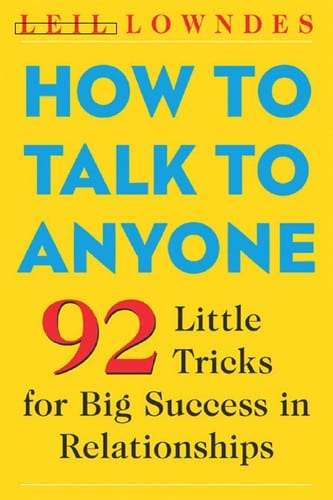
How to Talk to Anyone: Summary in 5 Key Points
AI-assisted book brief. Verify important claims against the original book; this page does not claim personal reading or independent expert review.
Questions to take into the book
- How does Lowndes group the techniques for opening and sustaining conversation?
- Which suggestions depend on reading another person's comfort rather than following a fixed script?
- How might cultural norms or individual preferences change whether a technique feels welcoming?
Who should read the full book
This book is a must-read for introverts, shy people, and those in customer-facing or sales roles who struggle with small talk or building relationships. However, experienced public speakers or those with naturally outgoing personalities may find some of the advice too basic.
📚 Get the full book on Amazon →How to use this idea
Lowndes offers short techniques for starting conversations, reading social cues, and building rapport. The book is best read as a set of suggestions to test gently, not as a formula for making anyone like you. A reader can assess whether a technique supports genuine attention and mutual comfort or instead turns a conversation into performance.
Where it has limits
Social norms vary by culture, personality, role, and context; scripted gestures may feel intrusive or inauthentic. Respect personal space, consent, and boundaries, and do not assume a technique can overcome another person's lack of interest.
A small test to try
In a conversation where it feels natural, ask one open question and listen to the answer without planning a response. Notice whether the exchange feels mutual; let it end comfortably if the other person is not interested.
AI-assisted editorial interpretation, not a claim of personal reading or independent expert review. Source checked 2026-10-14: McGraw Hill: How to Talk to Anyone edition listing.
Brief your own reading in 10 seconds
Paste any article, essay or notes and get the 5 points that matter. Free, no signup.
Ask anything about this book
Ask for an AI-assisted explanation. Useful questions may be considered for editorial review; repeated requests do not publish an answer.