Difficult Conversations: Summary in 5 Key Points
AI-assisted book brief. Verify important claims against the original book; this page does not claim personal reading or independent expert review.
Questions to take into the book
- What does each person believe happened, and where do those accounts differ?
- Which feelings or identity concerns are present beneath the stated disagreement?
- What would make a conversation unsafe or inappropriate to continue?
Who should read the full book
This book is essential for managers, leaders, and anyone who wants to improve their communication skills and navigate tough conversations with confidence. Those who struggle with conflict or avoid difficult conversations should read this book. However, readers looking for a quick fix or simple solutions may find the book's emphasis on preparation and mindset shift less appealing.
📚 Get the full book on Amazon →How to use this idea
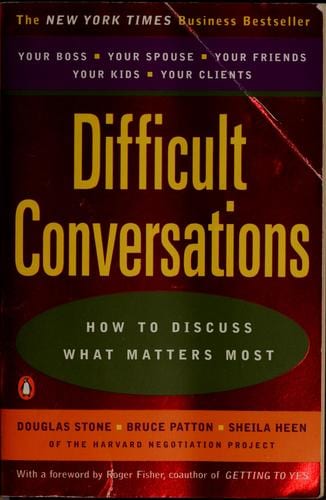
Stone, Patton, and Heen separate a tense disagreement into the account each person gives of what happened, the feelings involved, and what the exchange seems to say about identity. That structure can help a reader examine why repeating a position often stalls a discussion: the disagreement may concern different interpretations and unspoken concerns, not only the stated issue.
Where it has limits
A conversation framework cannot make an unsafe or coercive relationship safe. Some conflicts require formal processes, professional advice, or a clear boundary instead of another attempt at dialogue.
A small test to try
Write down your account of a low-stakes disagreement in three parts: what you believe happened, what you felt, and what it seemed to imply about you. Then write one question that could help you understand the other person's account.
AI-assisted editorial interpretation, not a claim of personal reading or independent expert review. Source checked 2026-10-11: Penguin Random House Higher Education: Difficult Conversations publisher overview.
Brief your own reading in 10 seconds
Paste any article, essay or notes and get the 5 points that matter. Free, no signup.
Ask anything about this book
Ask for an AI-assisted explanation. Useful questions may be considered for editorial review; repeated requests do not publish an answer.