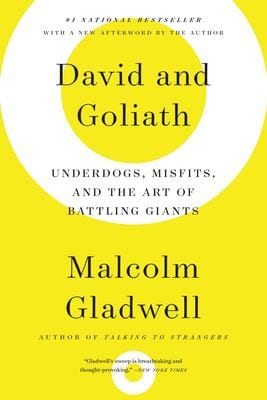
David and Goliath: Summary in 5 Key Points
AI-assisted book brief. Verify important claims against the original book; this page does not claim personal reading or independent expert review.
The brief
The inverted U-curve shows that too much of a good thing can be bad, which is why certain advantages can become disadvantages beyond a point.
Desire for autonomy and freedom can drive innovation and success, as seen in the story of David Boies, a dyslexic lawyer who won big cases.
The 10,000 hour rule of deliberate practice can lead to mastery, but only if the practice is focused and meaningful, not just repetitive.
Having a disadvantage, such as a learning disability, can force people to develop compensating skills, which can become a unique strength later.
Growing up in a family with a high level of turmoil can prepare children for the challenges of adulthood, making them more resilient and resourceful.
Key ideas worth keeping
Weaknesses can be leveraged into strengths with the right mindset
Being an underdog can drive innovation and success
Advantages can become disadvantages if taken too far
Who should read the full book
This book is for anyone interested in understanding how underdogs can win, especially entrepreneurs, educators, and individuals facing adversity. Those looking for a straightforward self-help book may be disappointed. Readers who enjoy Gladwell's storytelling style will find this book engaging.
📚 Get the full book on Amazon →Brief your own reading in 10 seconds
Paste any article, essay or notes and get the 5 points that matter. Free, no signup.
Ask anything about this book
Ask for an AI-assisted explanation. Useful questions may be considered for editorial review; repeated requests do not publish an answer.