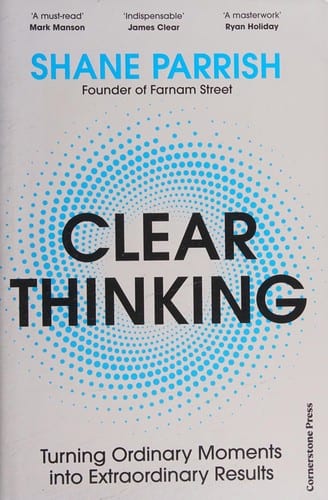
Clear Thinking: Summary in 5 Key Points
AI-assisted book brief. Verify important claims against the original book; this page does not claim personal reading or independent expert review.
Questions to take into the book
- Which routine reaction tends to take over before you have named the real decision?
- What evidence would change your first interpretation of a situation?
- How can you evaluate the quality of a decision separately from the outcome it produced?
Who should read the full book
This book is for business leaders, entrepreneurs, and individuals seeking to improve their critical thinking skills. Those already familiar with mental models and decision making frameworks may find some concepts repetitive. Readers looking for a straightforward guide to clear thinking will appreciate the book's practical advice.
📚 Get the full book on Amazon →How to use this idea
Parrish asks readers to notice the moments when routine reactions shape a decision before deliberate reasoning begins. The framework is useful as a pause between stimulus and response: identify the situation, question what is driving the first reaction, and then choose. Its strongest application is reviewing a concrete decision, not claiming that any checklist removes bias.
Where it has limits
A decision framework cannot make incomplete information complete or remove the pressures created by authority, time, or unequal resources. It also cannot guarantee a good outcome simply because the process felt deliberate.
A small test to try
Choose a recent low-stakes decision. Write the first reaction you had, the assumptions underneath it, and one fact that would change your view. Compare that record with what happened after you chose.
AI-assisted editorial interpretation, not a claim of personal reading or independent expert review. Source checked 2026-10-11: Penguin Books Australia: Clear Thinking publisher overview.
Brief your own reading in 10 seconds
Paste any article, essay or notes and get the 5 points that matter. Free, no signup.
Ask anything about this book
Ask for an AI-assisted explanation. Useful questions may be considered for editorial review; repeated requests do not publish an answer.