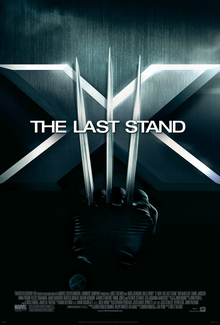
Official promotional poster. Rights belong to the respective rights holders.
Read the film reference Availability and pricing vary by region.X-Men: The Last StandA movie brief.
2006 / Superhero film / Directed by Brett Ratner
Mutant history is about to be rewritten.
What is X-Men: The Last Stand about?
The X-Men face a new threat in the form of a 'mutant cure' that causes serious repercussions among mutants and humans. Meanwhile, Jean Grey returns, unleashing a dark force.
Five things to know.
Setup
The film opens with Charles Xavier and Magneto meeting young Jean Grey and inviting her to join their school, the Xavier School for Gifted Youngsters.
World
The film is set in a world where mutants and humans coexist, but with growing tensions and fear of mutant powers.
Pressure
The X-Men and mutants face pressure from the introduction of a 'mutant cure' that threatens their very existence.
Craft
The film features extensive visual effects created by 11 different companies, including complex wirework rigs and computer-generated imagery.
Viewing note
The film is the third installment in the X-Men film series and the final film in the original X-Men trilogy.
A thought to take with you.
The proposed cure divides mutants over whether changing themselves is a choice, a threat, or a demand imposed by others. Jean's return brings a separate danger that the X-Men cannot resolve through politics alone, tying private fear to the team's public responsibilities.
Is it your kind of movie?
Choose it for the conclusion of the original X-Men trilogy, focused on a cure debate and Jean's return. The earlier films establish the team and relationships.
Sources & scope
This AI-assisted brief is based on the linked secondary reference. Facts and interpretation are separated; it does not claim personal viewing or independent expert review.
Source details checked September 8, 2026. Suggest a correction · Our editorial approach