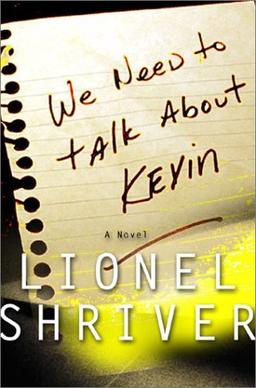
Official promotional poster. Rights belong to the respective rights holders.
Read the film reference Availability and pricing vary by region.We Need to Talk About KevinA movie brief.
2011 / Crime / Directed by Lynne Ramsay
A mother's guilt and a son's darkness intertwine.
What is We Need to Talk About Kevin about?
Eva Khatchadourian struggles to bond with her son Kevin, a difficult and emotionally detached teenager. After a tragic event, Eva reflects on their complicated relationship and her own role in shaping Kevin's life.
Five things to know.
Setup
The story is told through a series of letters from Eva to her husband, exploring their relationship and Kevin's troubled childhood.
World
The novel explores themes of motherhood, guilt, and the complexities of family dynamics in a suburban American setting.
Pressure
Eva faces pressure from her husband, community, and herself to understand and accept Kevin's actions, leading to a deeper exploration of their relationship.
Craft
The novel is written in an epistolary format, with Eva's letters revealing her inner turmoil and emotional struggle to come to terms with her son's actions.
Viewing Note
The film adaptation, also titled 'We Need to Talk About Kevin', offers a haunting and thought-provoking exploration of the novel's themes and characters.
A thought to take with you.
Eva's memories are presented in fragments that connect her isolation to the aftermath of an act of violence. The film does not turn parenthood into a simple explanation for Kevin; it asks what can be known about another person when past events are filtered through grief and guilt.
Is it your kind of movie?
Choose it for a formally fragmented drama about a family after a mass act of violence. It contains disturbing material involving a child and can be emotionally difficult.
Sources & scope
This AI-assisted brief is based on the linked secondary reference. Facts and interpretation are separated; it does not claim personal viewing or independent expert review.
Source details checked October 2, 2026. Suggest a correction · Our editorial approach