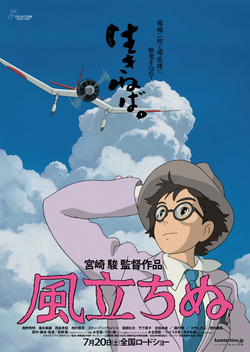
Official promotional poster. Rights belong to the respective rights holders.
Read the film reference Availability and pricing vary by region.The Wind RisesA movie brief.
2013 / historical drama / Directed by Hayao Miyazaki
The wind rises, and we must try to live.
What is The Wind Rises about?
The film portrays a fictionalized account of the life of Japanese aeronautical engineer Jiro Horikoshi. It follows his journey from his time at the University of Tokyo to the first test flight of the Mitsubishi Ka-14.
Five things to know.
Setup
The story begins with Jiro Horikoshi, a young aeronautical engineering student, who meets a girl named Nahoko during the Great Kantō earthquake.
World
The film is set in Japan during the 1920s and 1930s, and explores the country's early aviation industry amidst the Great Depression.
Pressure
Jiro faces challenges in his career, including failed aircraft designs and the militarization of Japan's aviation industry.
Craft
The film showcases the meticulous design and engineering process of Jiro and his colleagues as they strive to create innovative aircraft.
Viewing note
The film's historical context and themes may be disturbing to some viewers, particularly those sensitive to depictions of war and illness.
A thought to take with you.
The Wind Rises is a poignant exploration of the human spirit, balancing the pursuit of beauty and innovation with the harsh realities of war and mortality.
Is it your kind of movie?
Fans of historical dramas and aviation enthusiasts may appreciate the film's attention to detail and historical context. Viewers should be prepared for a contemplative and emotionally charged viewing experience.
Sources & scope
This AI-assisted brief is based on the linked secondary reference. Facts and interpretation are separated; it does not claim personal viewing or independent expert review.
Source details checked October 5, 2026. Suggest a correction · Our editorial approach