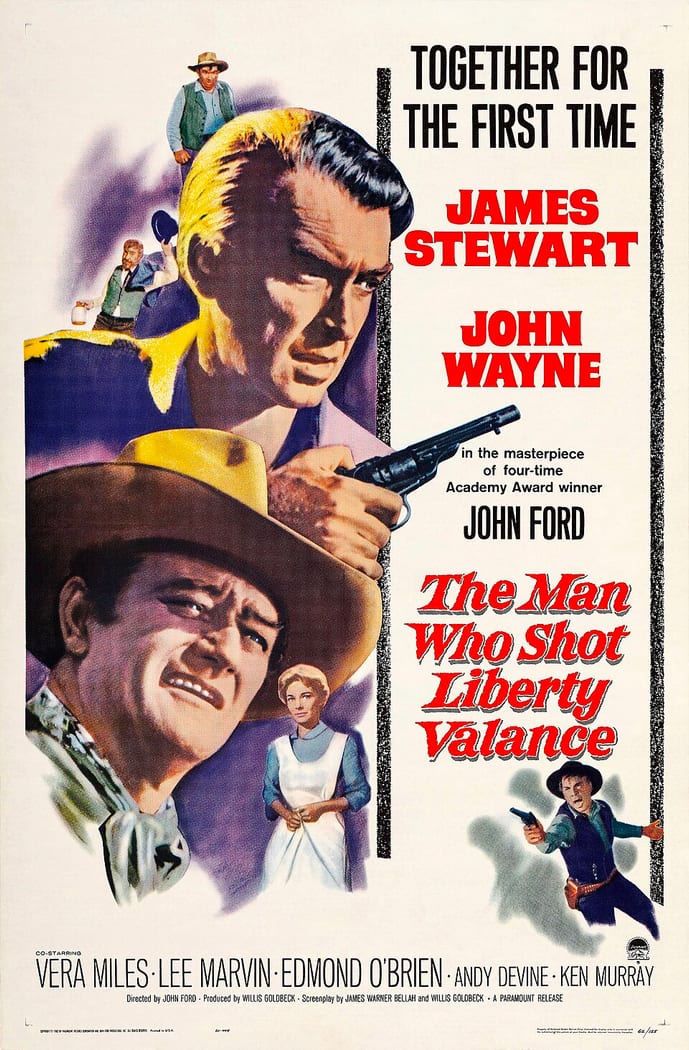
Official promotional poster. Rights belong to the respective rights holders.
Read the film reference Availability and pricing vary by region.The Man Who Shot Liberty ValanceA movie brief.
1962 / Western / Directed by John Ford
Legends are made, not born.
What is The Man Who Shot Liberty Valance about?
A young lawyer arrives in a small Western town and faces off against a notorious outlaw, while navigating a complicated romance with a local woman.
Five things to know.
Setting the Scene
The film is set near the turn of the 20th century in an unnamed Western state, possibly Colorado.
The World of Shinbone
The small town of Shinbone is portrayed as a rough and tumble frontier settlement with a corrupt marshal and a struggling newspaper.
Pressure Mounts
The protagonist, Ransom Stoddard, faces intense pressure from the outlaw Liberty Valance and his gang, who terrorize the town.
Crafting a Legend
The film explores the tension between truth and legend, as Stoddard's story is retold and mythologized over time.
A Note for Viewers
The film features a complex and nuanced portrayal of heroism, morality, and the power of storytelling.
A thought to take with you.
Ransom arrives with legal ideals in a town where Tom already understands the force that protects its residents. Their different responses to Liberty Valance shape the story's central question about whether a community remembers justice, courage, or the legend that makes both seem possible.
Is it your kind of movie?
Choose it for a classic Western about law, violence, and public memory. Its black-and-white style and slower pacing reflect its period.
Sources & scope
This AI-assisted brief is based on the linked secondary reference. Facts and interpretation are separated; it does not claim personal viewing or independent expert review.
Source details checked October 4, 2026. Suggest a correction · Our editorial approach