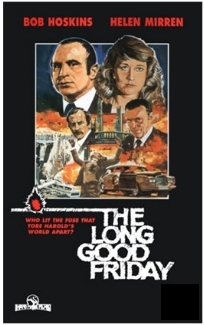
Official promotional poster. Rights belong to the respective rights holders.
Read the film reference Availability and pricing vary by region.The Long Good FridayA movie brief.
1980 / British gangster film / Directed by John Mackenzie
A London crime boss faces a Good Friday he'll never forget.
What is The Long Good Friday about?
Harold Shand, a powerful London gangster, plans a major redevelopment project and seeks American investment. His ambitions are suddenly threatened when a series of mysterious attacks disrupt his empire over a long holiday weekend.
Five things to know.
Ambitious Beginnings
Harold Shand, a formidable London firm gangster, endeavors to legitimize his operations through a grand London Docklands redevelopment scheme.
A City Under Siege
The film vividly portrays late 1970s London, showcasing its criminal underworld alongside elements of political and police corruption.
Escalating Pressure
Harold's ambitious plans are jeopardized by escalating, unexplained attacks that target his associates and properties throughout the holiday weekend.
Breakthrough Performance
Bob Hoskins delivers a breakthrough performance as Harold Shand, earning critical acclaim and awards for his intense and memorable portrayal.
A Classic Viewing
This acclaimed British film offers a gripping narrative and a deep dive into the complexities of organized crime and betrayal.
A thought to take with you.
Harold's redevelopment plans depend on investors believing he can control London, but unexplained attacks expose how fragile that claim is. His effort to identify the people behind them becomes a test of the authority he built through fear.
Is it your kind of movie?
Choose it for a British crime thriller about a gangster confronting threats to his business. Its late-1970s setting and escalating tension are central.
Sources & scope
This AI-assisted brief is based on the linked secondary reference. Facts and interpretation are separated; it does not claim personal viewing or independent expert review.
Source details checked October 4, 2026. Suggest a correction · Our editorial approach