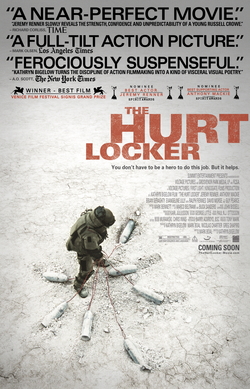
Official promotional poster. Rights belong to the respective rights holders.
Read the film reference Availability and pricing vary by region.The Hurt LockerA movie brief.
2008 / War film / Directed by Kathryn Bigelow
In the chaos of war, some find their true calling amidst the danger.
What is The Hurt Locker about?
In the intense environment of the Iraq War, a U.S. Army Explosive Ordnance Disposal team faces daily life-or-death missions. Their new team leader challenges conventional safety protocols, creating escalating tension among his squad members.
Five things to know.
Setup
A U.S. Army Explosive Ordnance Disposal team navigates the perilous landscape of the Iraq War, tasked with disarming deadly improvised explosive devices.
World
Filmed in Jordan, close to the Iraqi border, the production achieved raw authenticity, immersing viewers in the extreme heat and tense atmosphere.
Pressure
The psychological toll of constant danger and the high-stakes work of bomb disposal create immense stress and conflict within the team.
Craft
Director Kathryn Bigelow employed multiple Super 16mm cameras and a muscular editorial style to deliver a visceral, immersive viewing experience.
Viewing Note
Prepare for an adrenaline-fueled, suspenseful journey that delves into the human response to extreme combat, without revealing specific plot points.
A thought to take with you.
James's comfort in bomb disposal puts him at odds with a team that experiences the same missions as repeated danger. The film observes the difference between skill under pressure and the ability to live outside it, without presenting combat as an ordinary job.
Is it your kind of movie?
Choose it for a tense Iraq War drama centered on an Explosive Ordnance Disposal team. It contains intense scenes and dramatizes military experience.
Sources & scope
This AI-assisted brief is based on the linked secondary reference. Facts and interpretation are separated; it does not claim personal viewing or independent expert review.
Source details checked October 5, 2026. Suggest a correction · Our editorial approach