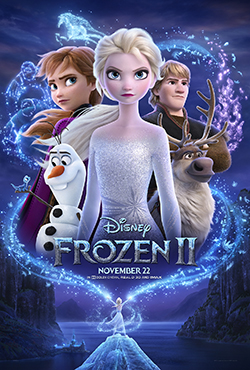
Official promotional poster. Rights belong to the respective rights holders.
Read the film reference Availability and pricing vary by region.Frozen IIA movie brief.
2019 / Animated musical fantasy film / Directed by Chris Buck, Jennifer Lee
Sisters unite on a journey to save their kingdom.
What is Frozen II about?
Three years after the events of the first film, Frozen 2 follows sisters Anna and Elsa, and their companions Kristoff, Sven, and Olaf as they travel to an enchanted forest to unravel the origin of Elsa's magical power. They must face their past and the secrets of their kingdom.
Five things to know.
Production
Frozen 2 was produced by Walt Disney Animation Studios with a budget of $150 million and was directed by Chris Buck and Jennifer Lee.
World
The film takes place in a fictional kingdom and features a magical forest, mythical creatures, and a range of colorful characters.
Pressure
The film's production team faced pressure to live up to the success of the original Frozen film, which grossed over $1 billion worldwide.
Craft
The film features stunning animation, with a focus on realistic depictions of nature, including wind, water, and fire.
Viewing note
The film is suitable for families and features a range of themes, including sisterly love, self-discovery, and environmentalism.
A thought to take with you.
Elsa's questions about her powers lead the sisters beyond the familiar kingdom, where their family's past becomes part of a present environmental threat. Anna and Elsa respond differently to uncertainty, making their loyalty to one another as important as discovering what happened.
Is it your kind of movie?
Choose it for a musical fantasy sequel about family history, change, and responsibility to a threatened forest. Frozen establishes the sisters and their relationship.
Sources & scope
This AI-assisted brief is based on the linked secondary reference. Facts and interpretation are separated; it does not claim personal viewing or independent expert review.
Source details checked September 8, 2026. Suggest a correction · Our editorial approach