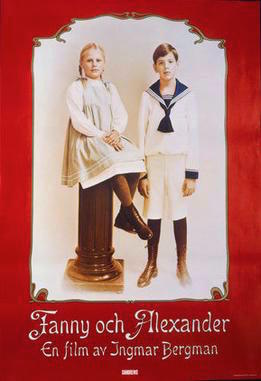
Official promotional poster. Rights belong to the respective rights holders.
Read the film reference Availability and pricing vary by region.Fanny and AlexanderA movie brief.
1982 / Period drama / Directed by Ingmar Bergman
Childhood memories blend fantasy and reality in a Swedish town.
What is Fanny and Alexander about?
In 1907 Sweden, the Ekdahl family's theatre prospers under Oscar's management. After his sudden death, his wife Emilie remarries a strict bishop, Edvard, who clashes with their imaginative son Alexander.
Five things to know.
Setup
The film is set in a Swedish town in the early 20th century and explores the lives of the Ekdahl family, owners of a moderately profitable theatre.
World
The story is semi-autobiographical, drawing from Bergman's own childhood experiences, and features a mix of realistic and fantastical elements.
Pressure
Alexander struggles with his strict stepfather, Edvard, a bishop who disapproves of his vivid imagination and storytelling.
Craft
The film features stunning cinematography by Sven Nykvist and a large cast, including Pernilla Allwin, Bertil Guve, and Gunn Wållgren.
Viewing note
The film exists in two versions: a 188-minute theatrical cut and a 312-minute television miniseries.
A thought to take with you.
Bergman's masterpiece weaves together family drama, fantasy, and historical context, creating a rich and immersive cinematic experience.
Is it your kind of movie?
Fans of period dramas and Ingmar Bergman's works will appreciate the film's intricate storytelling and atmospheric setting. Viewers should expect a slow-burning, contemplative pace and a blend of realistic and fantastical elements.
Sources & scope
This AI-assisted brief is based on the linked secondary reference. Facts and interpretation are separated; it does not claim personal viewing or independent expert review.
Source details checked October 12, 2026. Suggest a correction · Our editorial approach