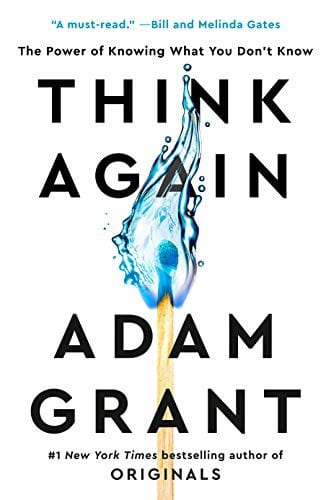
Think Again: Summary in 5 Key Points
AI-assisted book brief. Verify important claims against the original book; this page does not claim personal reading or independent expert review.
Questions to take into the book
- How do Grant's four conversational modes shape the way a person argues?
- What distinguishes intellectual humility from indecision or false balance?
- Which examples rely on research, and which illustrate the author's interpretation of a conversation?
Who should read the full book
This book is for individuals looking to improve their critical thinking and decision-making skills, particularly those in leadership positions or interested in personal development. Readers who are not open to challenging their own assumptions may not find the book valuable. Those with a strong background in psychology may find some concepts familiar.
📚 Get the full book on Amazon →How to use this idea
Grant argues that rethinking depends on intellectual humility and a willingness to revise beliefs, drawing on psychology, organizational research, and stories of persuasion. His preacher, prosecutor, politician, and scientist modes provide a memorable lens for examining discussion. The metaphors are prompts rather than validated personality types; disagreement alone does not guarantee learning or make every claim equally credible.
Where it has limits
This is a popular synthesis of research and anecdotes, not a complete scientific manual for persuasion. Updating beliefs should follow evidence quality, and open-mindedness does not require treating harmful or unsupported claims as equally valid.
A small test to try
Write down one low-stakes belief and the strongest evidence that could change it. Ask a thoughtful person who disagrees to explain their reasoning, then record what you learned without promising to adopt their conclusion.
AI-assisted editorial interpretation, not a claim of personal reading or independent expert review. Source checked 2026-10-14: Penguin Random House: Think Again edition and overview.
Brief your own reading in 10 seconds
Paste any article, essay or notes and get the 5 points that matter. Free, no signup.
Ask anything about this book
Ask for an AI-assisted explanation. Useful questions may be considered for editorial review; repeated requests do not publish an answer.