The Compound Effect: Summary in 5 Key Points
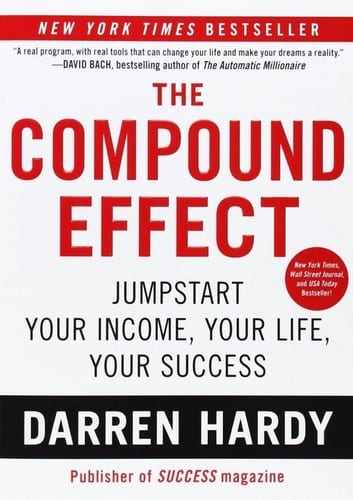
AI-assisted book brief. Verify important claims against the original book; this page does not claim personal reading or independent expert review.
Questions to take into the book
- What does Hardy recommend tracking, and how does tracking alter the feedback a person receives?
- Which examples show delayed consequences rather than immediate rewards?
- What assumptions about control or opportunity are needed for the book's model to apply?
Who should read the full book
This book is ideal for individuals seeking personal growth and self-improvement, particularly those interested in entrepreneurship or small business management. Readers looking for a quick fix or magic solution can skip it. Anyone willing to put in the effort to make small consistent changes will benefit from the book's insights.
📚 Get the full book on Amazon →How to use this idea
Hardy frames repeated choices as inputs whose accumulated results can become visible over time, and recommends tracking habits and adjusting the environment around them. This can help a reader notice small patterns, but the metaphor of compounding should not imply that every action produces linear gains or that outcomes are fully under personal control.
Where it has limits
The framework does not account for every structural constraint, random event, or unequal starting condition. Tracking is useful only when the measures are relevant and humane; it cannot guarantee success in health, money, work, or relationships.
A small test to try
Track one voluntary behavior and one external condition that affects it for seven days. Record context alongside frequency, then identify one change within your control without treating the result as a forecast.
AI-assisted editorial interpretation, not a claim of personal reading or independent expert review. Source checked 2026-10-11: Hachette Book Group: The Compound Effect edition and description.
Brief your own reading in 10 seconds
Paste any article, essay or notes and get the 5 points that matter. Free, no signup.
Ask anything about this book
Ask for an AI-assisted explanation. Useful questions may be considered for editorial review; repeated requests do not publish an answer.