Rule 1: Summary in 5 Key Points
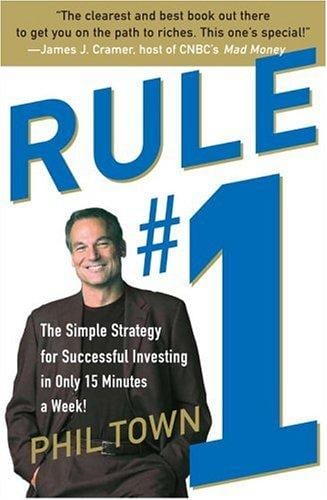
AI-assisted book brief. Verify important claims against the original book; this page does not claim personal reading or independent expert review.
Questions to take into the book
- Which parts of Town's checklist rely on estimates rather than observable facts?
- How does the book define a margin of safety, and what could still make that estimate fail?
- What risks does the method leave outside its valuation calculation?
Who should read the full book
This book is ideal for individual investors and those new to the stock market. Experienced investors may find some concepts familiar, but the book's clear explanations make it accessible to all. Those looking for a get-rich-quick scheme can skip it.
📚 Get the full book on Amazon →How to use this idea
Town's Rule #1 turns stock selection into a checklist built around business quality, estimated value, and a margin of safety. Its practical appeal is that it asks readers to show their assumptions rather than follow a market story. But the checklist depends on forecasts and valuation judgments that can be wrong, even when each step appears precise.
Where it has limits
This is one author's investing method, not individualized financial advice or a reliable route to returns. A margin-of-safety calculation cannot remove business, market, currency, or concentration risk; never treat the book's rules as a guarantee or invest money you cannot afford to lose.
A small test to try
Take one fictional company and list the assumptions needed to estimate its future cash flow and value. Mark which assumptions are facts and which are guesses; do not use this exercise as a buy or sell signal.
AI-assisted editorial interpretation, not a claim of personal reading or independent expert review. Source checked 2026-10-11: Penguin Random House: Rule #1 book description and edition.
Brief your own reading in 10 seconds
Paste any article, essay or notes and get the 5 points that matter. Free, no signup.
Ask anything about this book
Ask for an AI-assisted explanation. Useful questions may be considered for editorial review; repeated requests do not publish an answer.