Flow: Summary in 5 Key Points
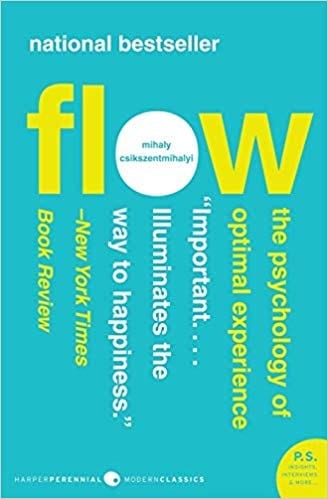
AI-assisted book brief. Verify important claims against the original book; this page does not claim personal reading or independent expert review.
Questions to take into the book
- How does the author connect challenge and skill to the experience of flow?
- What role do clear goals and feedback play in the examples?
- Where does the book's account describe an experience without showing that it is available to everyone?
Who should read the full book
This book is a must-read for psychologists, educators, and anyone interested in personal growth and happiness. Business leaders and coaches will also benefit from Csikszentmihalyi's insights on motivation and engagement. However, readers looking for a quick fix or superficial self-help advice may find the book too dense and theoretical.
📚 Get the full book on Amazon →How to use this idea
Csikszentmihalyi describes flow as deep involvement in an activity, often where challenge and skill are in workable balance and goals and feedback are clear. The idea links attention to the structure of an activity, not just willpower. It is most useful as a lens for examining tasks; the book's broad account should not be mistaken for a universal formula for happiness.
Where it has limits
A psychological concept does not imply that people can always control their circumstances or access uninterrupted work. This book's account is a framework for reflection, not a clinical assessment or proof that difficult conditions can be solved by changing one's attitude.
A small test to try
Choose a recent activity that held your attention. Record its goal, feedback, perceived challenge, and your current skill. Compare it with an activity where attention broke down, without assuming that one adjustment will reproduce flow.
AI-assisted editorial interpretation, not a claim of personal reading or independent expert review. Source checked 2026-10-11: Harper Academic: Flow, The Psychology of Optimal Experience.
Brief your own reading in 10 seconds
Paste any article, essay or notes and get the 5 points that matter. Free, no signup.
Ask anything about this book
Ask for an AI-assisted explanation. Useful questions may be considered for editorial review; repeated requests do not publish an answer.