Determined: Summary in 5 Key Points
AI-assisted book brief. Verify important claims against the original book; this page does not claim personal reading or independent expert review.
Questions to take into the book
- What timescales of biological and environmental influence does Sapolsky connect to a behavior?
- Which conclusions in the book are empirical, and which depend on a philosophical account of free will?
- How does the author think society should change if his argument is accepted, and what objections might remain?
Who should read the full book
This book is ideal for readers interested in psychology, biology, and personal development, particularly those seeking to understand the underlying factors that drive human behavior. Readers looking for a light, easy read may find the book too dense and complex. Scholars and researchers in related fields will also appreciate the book's in-depth analysis and insights.
📚 Get the full book on Amazon →How to use this idea
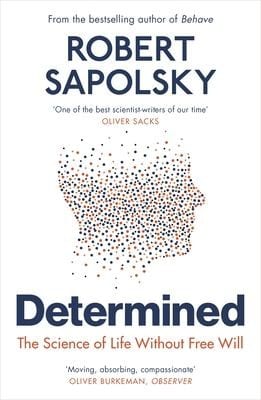
Sapolsky argues that behavior arises from biological and environmental causes operating across seconds, development, and evolution, and uses this account to challenge libertarian free will. The book is a forceful synthesis and philosophical position, not a settled consensus: readers should distinguish the empirical work on influences over behavior from the larger normative conclusion about agency and responsibility.
Where it has limits
The interpretation of neuroscience for free will, blame, and punishment remains debated across philosophy, law, and science. This summary presents Sapolsky's thesis, not a consensus finding or a reason to dismiss personal agency, accountability, or the practical value of changing circumstances.
A small test to try
Separate one claim in the book into (a) an empirical claim about causes of behavior and (b) a philosophical conclusion about responsibility. Note what kind of evidence could support or challenge each part.
AI-assisted editorial interpretation, not a claim of personal reading or independent expert review. Source checked 2026-10-14: Penguin Random House: Determined edition and argument overview.
Brief your own reading in 10 seconds
Paste any article, essay or notes and get the 5 points that matter. Free, no signup.
Ask anything about this book
Ask for an AI-assisted explanation. Useful questions may be considered for editorial review; repeated requests do not publish an answer.