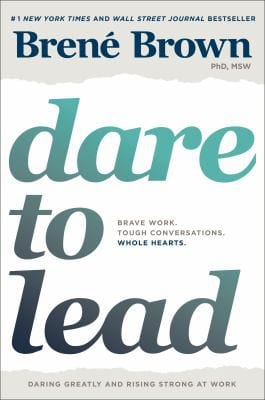
Dare to Lead: Summary in 5 Key Points
AI-assisted book brief. Verify important claims against the original book; this page does not claim personal reading or independent expert review.
Questions to take into the book
- Which four skill areas does Brown use to describe daring leadership?
- How does a stated value become observable in a team's daily work?
- What safeguards let people speak honestly without being pressured to disclose personal information?
Who should read the full book
Dare to Lead is a must-read for leaders, managers, and entrepreneurs seeking to transform their organizations and develop brave leadership skills. However, individuals looking for a quick fix or a step-by-step guide may find the book's focus on mindset and culture shifts less relevant. Readers familiar with Brown's previous work may still find new insights and applications.
📚 Get the full book on Amazon →How to use this idea
Brown presents leadership as a set of skills that includes engaging vulnerability, aligning actions with values, building trust, and learning to recover after setbacks. The framework turns abstract values into behaviors a group can discuss. Its most useful question is whether people can see those behaviors in everyday decisions, especially when speaking openly carries a cost.
Where it has limits
A leadership framework cannot compensate for unsafe working conditions, unequal authority, or absent accountability. Asking people to be vulnerable is not a substitute for protecting confidentiality and giving them a real choice about what to share.
A small test to try
Choose one value the book discusses. Describe one observable behavior that would show it in a meeting, and one behavior that would contradict it. Consider how a team could raise the mismatch without penalizing the person who speaks.
AI-assisted editorial interpretation, not a claim of personal reading or independent expert review. Source checked 2026-10-11: Brené Brown: official Dare to Lead page.
Brief your own reading in 10 seconds
Paste any article, essay or notes and get the 5 points that matter. Free, no signup.
Ask anything about this book
Ask for an AI-assisted explanation. Useful questions may be considered for editorial review; repeated requests do not publish an answer.